%20(1).png)
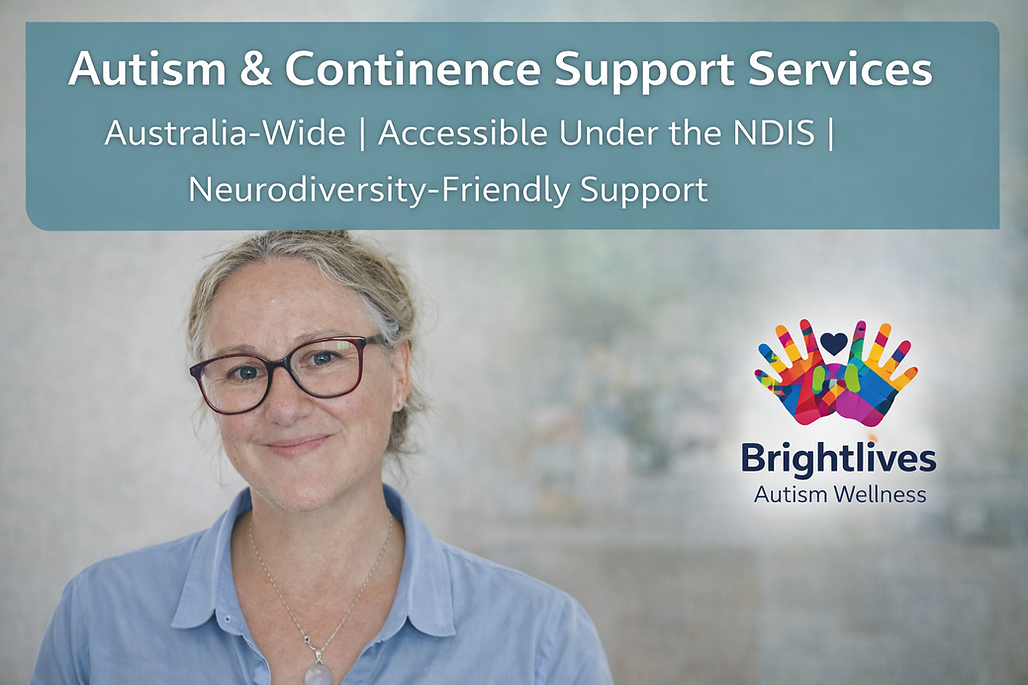

When continence and daily living challenges feel complex, you need more than a standard approach.
I’m Monica Reeves, a Clinical Nurse Consultant specialising in continence and autism, and the founder of Bright Lives. I support individuals with disability and their families to understand what’s really going on, and provide clear, practical strategies that make a meaningful difference in everyday life.
Clinical Nurse
Consultant
Founder of
BrightLives
Autism & Continence Specialist
Telehealth Across Australia
About Monica
I am a Clinical Nurse Consultant with a specialised focus on continence, autism, and complex support needs. My work is grounded in both strong clinical knowledge and a deep understanding of the lived realities families face.
I work with children, adolescents, and adults who present with complex needs, where continence challenges are often just one part of a much bigger picture. These are not simple cases, and they require more than standard approaches.
My Background
My experience spans correctional health, remote Indigenous communities, disability services, and private practice. These environments have shaped the way I work, practical, adaptable, and always person-centred.Over time, I recognised a significant gap in the disability sector.
Many individuals and families were not receiving the level of specialised continence support they required, particularly when autism, sensory needs, behaviour, and communication differences were involved.
Bright Lives was created to bridge that gap.


My Clinical Approach
Continence is rarely just about bladder or bowel function. I assess and consider:
• Sensory processing and interoception.
• Communication and cognitive capacity.
• Behavioural patterns and emotional regulation.
• Environmental setup and routines.
• Physical health, mobility, and underlying conditions.
This allows me to identify not just what is happening, but why it is happening. From there, I develop tailored, practical strategies that are realistic for the individual and their support team to implement. These strategies may include product recommendations, environmental modifications, hygiene supports, structured routines, and multidisciplinary collaboration.
The goal is always the same, to improve comfort, dignity, independence, and quality of life.